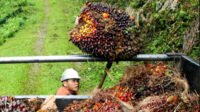
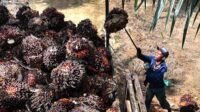
PALMOILMAGAZINE, KAPUAS HULU – Amidst the lush greenery of Sebaru Village, Silat Hilir District, in Kapuas Hulu Regency—an area often dubbed the heart of Kalimantan—a group of independent smallholder farmers is redefining what sustainable agriculture looks like in Indonesia’s palm oil sector.
Organized under the Independent Palm Oil Farmers Association Mitra Bersama (PPSMMB), and as members of the Indonesian Sustainable Palm Oil Farmers Forum (Fortasbi), these farmers have become a model for local institutions committed to environmentally responsible farming.
Kapuas Hulu is widely recognized as a vital conservation area, critical to maintaining Kalimantan’s biodiversity and ecological balance. In this setting, PPSMMB is doing more than producing fresh fruit bunches (FFB)—they are actively leading a grassroots shift towards sustainable practices rooted in equity and ecological care.
Also Read:
According to Palmoilmagazine.com on Saturday, May 10, 2025, this commitment is more than just lip service. Along a three-kilometer stretch of riverbank within their farming area, PPSMMB has strictly banned oil palm planting. Additionally, chemical fertilizers are no longer applied to palms planted near the water. These actions aim to protect water quality and preserve the river ecosystem from agricultural runoff and contamination.
Preventing Fire, Protecting Forests
Recognizing the seasonal threat of forest and land fires (karhutla) in Kalimantan, PPSMMB is also taking proactive steps. They have trained local fire prevention teams and launched awareness campaigns about the dangers of slash-and-burn practices. These initiatives target surrounding communities and promote a shared sense of responsibility in safeguarding the environment.
Recognition and Forward Momentum
In 2024, PPSMMB achieved a significant milestone by obtaining certification from the Roundtable on Sustainable Palm Oil (RSPO). This achievement not only enhances the marketability of their palm oil but also reinforces their credibility in a global supply chain that increasingly prioritizes environmental compliance.
Now, PPSMMB is focused on scaling up these efforts by encouraging all members to adopt best management practices. Their vision is simple yet powerful: for independent smallholders to be seen not only as producers, but as protectors of Kalimantan’s natural heritage. (P2)