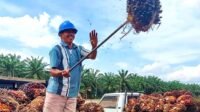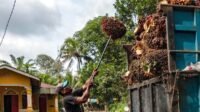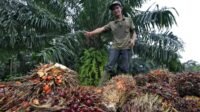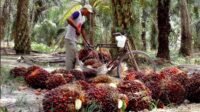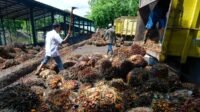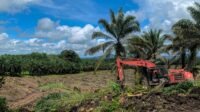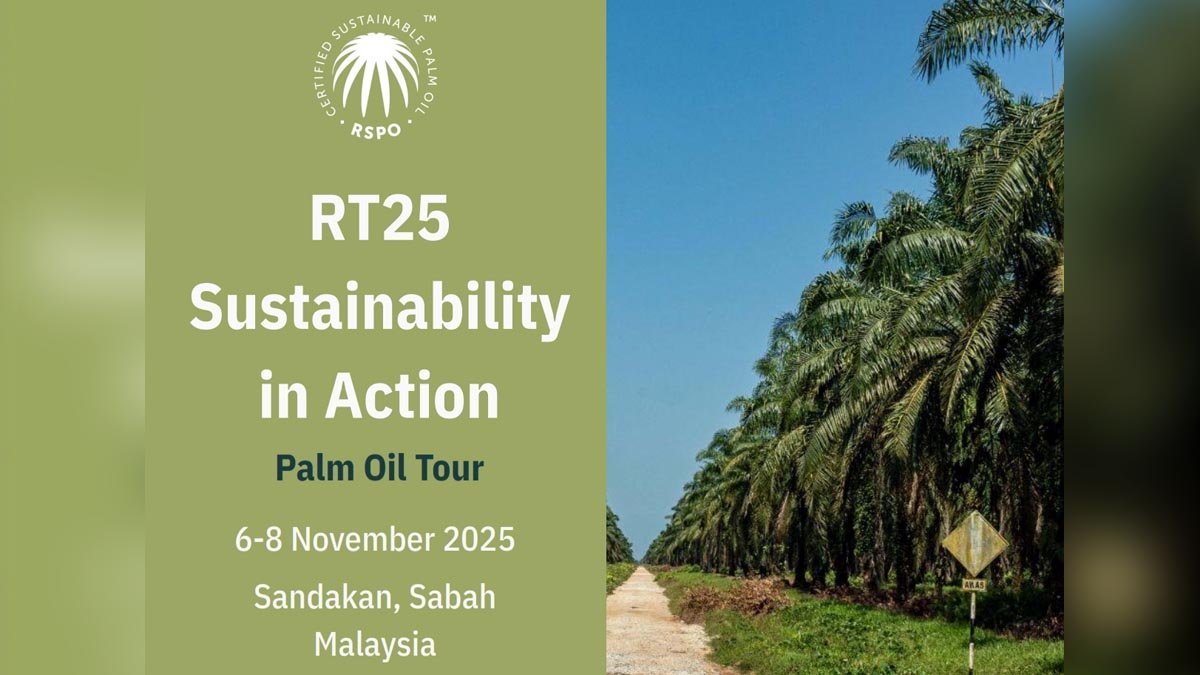
PALMOILMAGAZINE, SABAH — Malaysia’s leadership in sustainable palm oil practices once again comes into global focus. Through the RT25 Sustainability in Action Palm Oil Tour held on 6–8 November 2025 in Sandakan, Sabah, the Roundtable on Sustainable Palm Oil (RSPO) invited participants from around the world to witness firsthand the long journey of sustainability transformation in Sabah’s palm oil sector.
This initiative is more than just a tour—it is a rare opportunity to see how local government, major companies, and smallholders work hand in hand to maintain balance between production and environmental conservation. Since 2015, the Sabah State Government has set a target for 100% of its palm oil production to be RSPO-certified by 2025, making it the world’s first model of a jurisdictional approach to sustainability.
“Sabah demonstrates how multi-stakeholder collaboration can transform the palm oil industry into one that is greener and more inclusive. This is not merely a commitment, but real action toward a sustainable future,” said an RSPO representative in an official statement received by Palmoilmagazine.com on Sunday (2/11/2025).
Also Read:
During the tour, participants will visit plantations and mills owned by Kretam Holdings Berhad (KHB), the Kinabalu Palm Oil Conservation Area in Sungai Pin, and the KO-SALESA smallholder group, all of which have obtained RSPO certification. Each site tells a unique story of how sustainability principles are implemented on the ground.
Kretam Holdings: Green Innovation from Upstream to Downstream
As one of Malaysia’s leading palm oil players, Kretam Holdings Sdn Bhd is committed to implementing industry best practices in line with RSPO, ISCC, and MSPO standards. The company actively protects high conservation value (HCV) areas, enforces a strict no-burning policy, and safeguards habitats of rare species and peatlands.
“We believe sustainability is a long-term investment. By adopting best practices and environmentally friendly innovations, we aim to ensure this industry remains viable for future generations,” said a spokesperson for Kretam Holdings.
KHB also drives green innovation through energy efficiency, waste management, and water conservation programs. By applying Good Agricultural Practices (GAP) and Good Manufacturing Practices (GMP), the company seeks to minimize environmental impacts while improving community welfare around its operations.
Sawit Kinabalu: From Plantation to Conservation Zone
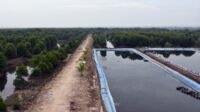
The Sungai Pin Conservation Area, managed by Sawit Kinabalu Group, represents a paradigm shift in the palm oil industry. Located in the sensitive ecosystem of Lower Kinabatangan in Eastern Sabah, the 2,500-hectare area was once a plantation site. After facing severe flooding and encroachment threats, the company decided to conserve and restore the land.
“We learned that protecting nature is part of sustaining business. Sungai Pin is not just a conservation area, but an ecological legacy for Sabah,” stated representatives from Sawit Kinabalu Group.
Also Read: RSPO–APKASINDO Forge Partnership to Strengthen Inclusive Growth and Market Access for Smallholders
Since partnering with the Sabah Forestry Department in 2017, Sawit Kinabalu has turned Sungai Pin into a symbol of carbon stock preservation and REDD+ (Reducing Emissions from Deforestation and Forest Degradation) success. This initiative reinforces the company’s commitment to the three sustainability pillars—Planet, People, and Prosperity.
KO-SALESA: Smallholders at the Frontline of Sustainability
The RSPO tour also highlights the inspiring journey of KO-SALESA (Koperasi Sawit Lestari Sabah), supported by WWF-Malaysia through the Sustainable Palm Oil Team (SPOT) program. The cooperative comprises 37 smallholders, along with 50 farmers from Koperasi Lestari Penanam Sawit Sabah Berhad (KLASS), managing a total of around 1,300 hectares in the Tabin and Sandakan regions.
“We want to show that smallholders can also produce sustainable palm oil. With RSPO and WWF guidance, we’ve learned to protect rivers, soil, and forests while staying productive,” said Nur Aina, one of the female members of KO-SALESA.
Also Read: PTPN IV PalmCo Targets $3.6 Million in Additional Revenue Through RSPO-Certified CPO Sales
Of the total area, 204.63 hectares are now managed sustainably by 31 farmers—around 75% of whom are women actively contributing to productivity, environmental protection, and community well-being.
With a rich agenda and diverse field visits, the RT25 Sustainability in Action Palm Oil Tour stands as tangible proof that sustainability is not just a concept—it’s a movement in action. Today, Sabah emerges as a living laboratory for the world, showing that palm oil production can coexist with environmental protection and community prosperity. (P1)