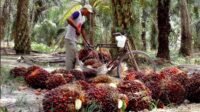
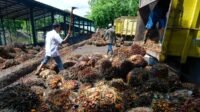
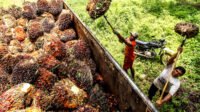
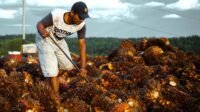
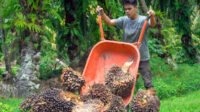
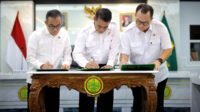
PALMOILMAGAZINE, JAKARTA – PT Menthobi Karyatama Raya Tbk (MKTR) continues to drive innovation in the plantation industry by constructing a biomass plant that utilizes empty fruit bunches (EFB) pellets. Through its subsidiary, PT Menthobi Hijau Lestari (MHL), the company has officially partnered with PT Suar Energi Futura under a Joint Operation Agreement to establish a production facility with a capacity of 10 tons per hour.
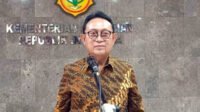
MKTR Director, Pahlevi Pangerang, emphasized that this project is a strategic move to convert palm oil waste into green energy, supporting the transition to sustainable energy. “This facility provides a solution for managing empty fruit bunch (EFB) waste while offering an environmentally friendly renewable energy source,” he stated, as quoted by Palmoilmagazine.com from an official release on March 4, 2025.
The biomass plant is set to enter commercial operations in Q4 2025. As part of its preparation, MHL has been conducting trial productions since November 2024 on a smaller scale to ensure that the output meets industry standards.
MHL Director, Dadan Ramdhani, highlighted the key advantages of EFB pellets, including high calorific value, low potassium and chlorine content to prevent boiler corrosion, and optimal moisture levels for efficient combustion. “Our burning tests comparing EFB pellets and palm kernel shells have exceeded initial expectations, proving EFB pellets’ strong potential as an alternative energy source,” Dadan explained.
He is confident that the biomass plant will be a game changer in palm oil waste management, improving efficiency, profitability, and sustainability while supporting the government’s green energy transition goals. EFB pellets are regarded as a cost-effective energy source suitable for industrial use and power generation.
This initiative aligns with the government’s vision for green energy expansion, as outlined in President Prabowo’s Astacita energy sector goals. By investing in biomass development, MKTR strengthens its position in the green industry while delivering added value to stakeholders. This project serves as clear proof that sustainability and profitability can go hand in hand in Indonesia’s plantation sector. (T2)