
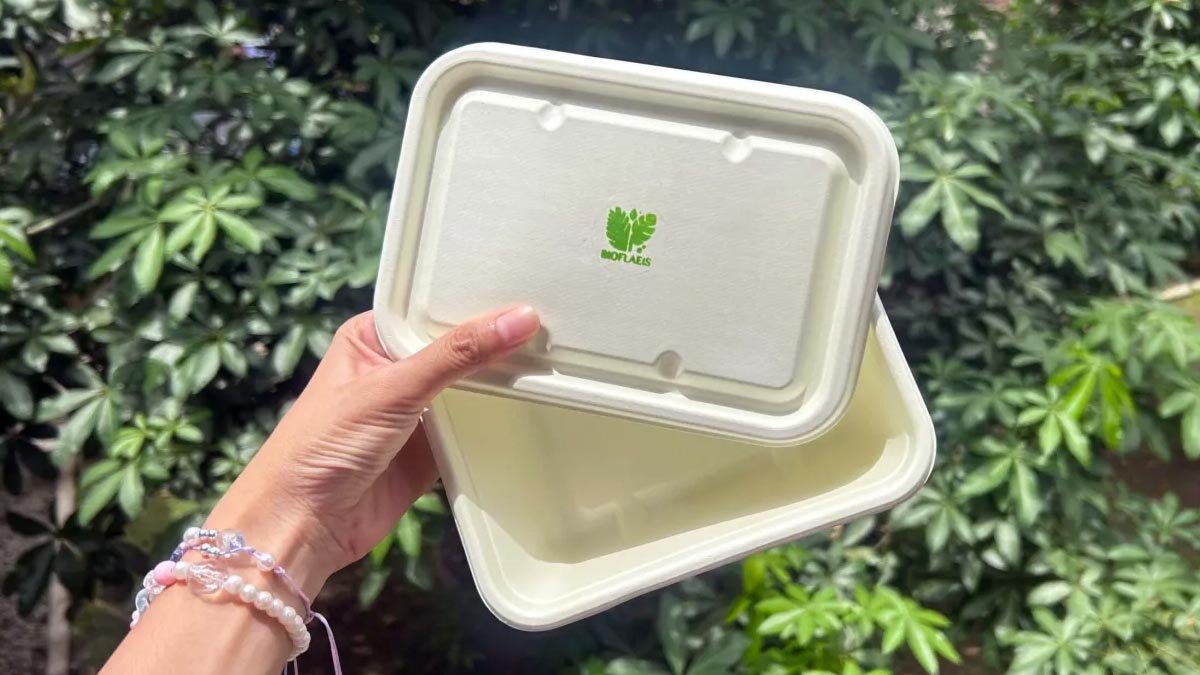
PALMOILMAGAZINE, MEDAN – Amid growing public awareness of the dangers of single-use plastics, a group of students from Universitas Sumatera Utara (USU) has introduced an innovative and sustainable solution called BIOFLAEIS—an eco-friendly food packaging material made from palm frond waste and papaya leaves.
The innovation was developed by students from USU’s Chemical Engineering and Development Economics programs through the Student Creativity Program – Entrepreneurship (PKM-K). The team consists of Shintia Florensia Silaban, Yeggin Damanik, Feodora Nicole Holongy Sitompul, Gita Triani Sinaga, and Letminda Oftavya Purba, under the guidance of lecturer Ilham Perkasa Bako.
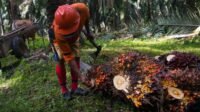
“BIOFLAEIS is more than just a product—it’s a moral movement to inspire people to care for the environment,” said Shintia, as quoted by Palmoilmagazine.com from USU on Tuesday (October 14, 2025). She explained that palm fronds and papaya leaves were chosen because they are abundant and rich in beneficial compounds. Palm fronds contain cellulose and hemicellulose suitable for producing biofoam, while papaya leaves have antibacterial properties that help preserve food freshness.
Also Read:
The product offers two main advantages: it is biodegradable and functional in maintaining food quality. With these features, BIOFLAEIS provides a practical alternative to conventional Styrofoam packaging, which is difficult to decompose and potentially harmful to human health.
Supervisor Ilham Perkasa Bako highlighted that this innovation demonstrates how science can directly address everyday problems. “From materials considered waste, students have managed to create a solution that is both economically valuable and environmentally friendly,” he noted.
For marketing, the team utilizes social media and explores partnerships with culinary MSMEs, cafés, and restaurants that are transitioning toward sustainable products. This strategy aims to accelerate the market adoption of BIOFLAEIS, particularly among young consumers who are increasingly eco-conscious.
USU Rector Prof. Muryanto Amin also expressed his appreciation for the breakthrough, emphasizing that universities must be spaces that encourage students to develop sustainable and globally relevant innovations. “Students should not only learn theory but also create real solutions for society,” he said.
Looking ahead, the BIOFLAEIS team plans to scale up production by engaging more local partners and palm oil farmers, transforming agricultural waste into materials of higher economic value. (P2)