PALMOILMAGAZINE, JAKARTA — The year 2026 is poised to mark a crucial turning point for Indonesia’s palm oil industry. After three years of turbulence—triggered by fertilizer price spikes, shifting export policies, and global energy volatility—the sector is now charting a more stable and sustainable growth path. Key indicators show encouraging trends: production is rising, weather conditions are returning to normal, and domestic demand remains strong. Yet, structural challenges persist, ranging from ambitious biodiesel policies and sluggish replanting programs to regulatory uncertainties that threaten the industry’s competitiveness.
Production Rebounds Amid Normalized Weather
According to the USDA (2025), Indonesia’s palm oil output in 2025/2026 is projected to grow by about 3% to 47 million metric tons, driven by two major factors: normalized weather and improved fertilizer availability.
The Meteorology, Climatology, and Geophysics Agency (BMKG) confirmed that the La Niña event—which depressed production in 2023–2024—ended in March 2025. This year, Indonesia will enter a neutral ENSO and Indian Ocean Dipole (IOD) phase, meaning rainfall and temperatures are expected to stabilize. Under such conditions, fertilization becomes more effective, and fruit set rates improve.
Fertilizer prices have also dropped by as much as 59% from their 2022 peak, offering much-needed relief to farmers. Plantation maintenance has resumed more intensively, especially in southern Sumatra and Central Kalimantan, where yields had fallen due to post-pandemic cost efficiency measures.
Also Read: Study Recommends Stable Tariff Policy to Strengthen India’s Edible Oil Market
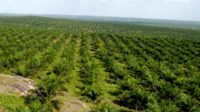
National oil palm area is expected to remain stable at 14.4 million hectares, with production gains stemming primarily from productivity improvements rather than land expansion. This means output growth will depend heavily on better farm management, high-yield planting materials, and replanting programs.
Productivity Gap: The Achilles’ Heel of Competitiveness
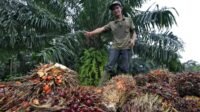
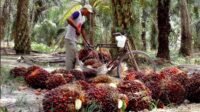
While total production is rising, productivity gaps between large plantations and smallholders remain wide. Smallholders—who manage 41% of Indonesia’s oil palm area—average just 3.2 tons of CPO per hectare, compared to 4.5 tons achieved by large estates (World Bank, 2023).
The Smallholder Replanting Program (PSR) was designed to close this gap. Since 2024, the government has doubled PSR support from IDR 30 million to IDR 60 million per hectare. However, implementation remains sluggish due to persistent issues such as unclear land legality, limited access to finance, and slow field verification.
Also Read: Palm Oil as a Pillar of Indonesia Emas 2045: Through Food and Energy Self-Sufficiency
The success of PSR will determine the industry’s future. Without massive replanting, Indonesia risks stagnating output within five years, even as biodiesel and food demand continue to climb.
Stable CPO Prices, But Shrinking Margins
CPO prices are expected to remain relatively stable in 2026. Kenanga Research forecasts prices between RM 4,000–4,500 per ton, averaging RM 4,000 next year. This range remains profitable for efficient producers.
However, price stability does not automatically translate into healthy margins. High logistics costs, exchange rate volatility, and export levies—used to fund biodiesel programs—are squeezing profitability.
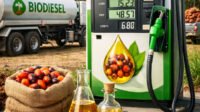
At the same time, elevated prices encourage the government to expand the biodiesel mandate. The B40 program officially began in March 2025, and preparations for B50 are underway for 2026.
Biodiesel Policy: Balancing Ambition and Fiscal Reality
Indonesia’s biodiesel policy symbolizes energy independence but remains highly dependent on government fiscal capacity. In 2025, biodiesel subsidies channeled through the Plantation Fund Management Agency (BPDP) reached IDR 35 trillion, a 25% increase from the previous year.
This funding comes entirely from export levies on palm oil. However, when exports decline due to global restrictions, levy revenues shrink—a fiscal paradox: the greater the domestic biodiesel demand, the heavier the fiscal burden on the industry.
Also Read: Legal and Economic Impacts of Oil Palm Land Confiscation on the Indonesian Palm Oil Industry
If the government pushes ahead with B50 without aligning fiscal capacity and feedstock supply, subsidy obligations could balloon, straining BPDP liquidity. This could trigger delayed subsidy payments to producers, domestic supply disruptions, and downward pressure on farmgate CPO prices.
The solution is not to abandon biodiesel, but to reform its financing framework. The government must revise the export levy formula to make it more responsive to global price shifts and explore complementary funding sources such as carbon credits or green bonds.
DMO and Cooking Oil Prices: Recurring Market Distortions
Another key issue lies in the Domestic Market Obligation (DMO) for cooking oil. The “Minyakita” program, aimed at keeping cooking oil affordable, has revived the long-standing dilemma between price stability and market efficiency.
Although the retail price ceiling (HET) was raised to IDR 15,700 per liter in August 2024, actual market prices remain 10–18% higher—highlighting weak distribution and oversight. Industry players have reported issues like product repackaging, bundling, and speculative stockpiling.
DMO policies, though well-intentioned, risk further distortions unless supported by digital supply chain monitoring and transparent stock data.
Also Read:
A long-term fix would be adopting a floating price mechanism for domestic cooking oil, with periodic adjustments based on global market trends. The government could still provide targeted subsidies to low-income households via a digital food smart card system rather than distorting prices across the board.
Regulatory Uncertainty Dampens Investment
Policy unpredictability remains one of the biggest deterrents for new investments. Government Regulation (PP) No. 45/2025, which expands administrative and criminal penalties for land governance violations, has raised investor concerns.
Vague definitions of violations and unclear appeal mechanisms heighten legal risks. This is compounded by cases of state land seizures by Agrinas under the pretext of asset optimization—actions that signal an interventionist approach unfavorable to investors.
If this continues, the industry’s investment appeal will erode. In an era where global investors prioritize ESG (Environmental, Social, and Governance) compliance and policy predictability, capital will shift to more transparent agribusiness sectors.
Export Opportunities and Palm Oil Diplomacy
Despite domestic pressures, there are bright spots internationally. The Indonesia–EU Comprehensive Economic Partnership Agreement (EU-CEPA), expected to take effect by mid-2026, could reopen European markets to Indonesia’s sustainable palm oil.
The agreement not only provides tariff preferences but also recognizes the Indonesian Sustainable Palm Oil (ISPO) certification as equivalent to EU sustainability standards—a major diplomatic breakthrough.
The U.S. market also presents opportunities. The reinstatement of high tariffs on vegetable oils from China and Latin America creates openings for Indonesian palm oil, particularly in the oleochemical and processed food industries.
Yet, these opportunities will only materialize if Indonesia maintains stable domestic supply and pricing. Overly rigid biodiesel and DMO policies could undercut export potential just as new markets open.
Policy Reform Recommendations for 2026
To prevent stagnation and sustain Indonesia’s global palm oil leadership, several strategic reforms are crucial:
- Reform Fiscal Governance in Palm Oil. BPDP should ensure full transparency and balance funding allocations among biodiesel support, smallholder replanting, and R&D for high-yield varieties.
- Review Government Regulation No. 45/2025. The government must clarify definitions of violations and strengthen appeal mechanisms to reduce legal uncertainty.
- Transform DMO into a Smart Market Scheme. Implement a flexible pricing system with direct digital subsidies to vulnerable groups rather than imposing blanket price controls.
- Accelerate Replanting and Green Financing Access. Encourage national banks to expand green financing with government guarantees, enabling smallholders to replant despite administrative hurdles.
- Strengthen Global Palm Oil Diplomacy. Use EU-CEPA and the G20 as platforms to promote sustainable Indonesian palm oil and secure international recognition of ISPO.
Indonesia’s palm oil industry has repeatedly proven its resilience through crises. But in the era of energy transition and green economics, survival depends on bold structural reforms.
Palm oil is not merely about production and exports—it’s about governance, equity, and environmental stewardship. With consistent, transparent, and smallholder-focused policies, Indonesia can not only maintain its global dominance but also transform palm oil into the cornerstone of an inclusive and competitive green economy. (*)
CPO Price Trends 2015–2025 (USD/ton)
| 2015 | 2016 | 2017 | 2018 | 2019 | 2020 | 2021 | 2022 | 2023 | 2024 | 2025* |
| 615 | 691 | 703 | 595 | 569 | 706 | 1.204,00 | 1.347,59 | 960,23 | 1.105,16 | 1.210,40 |
*) average temporary price