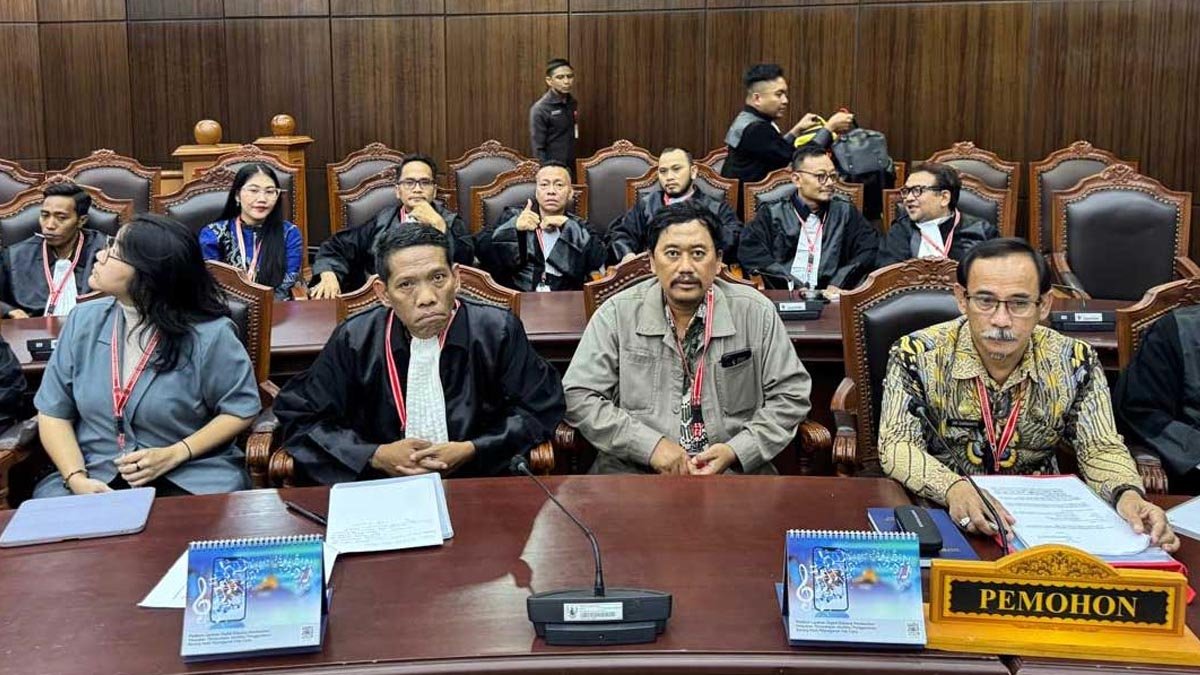
PALMOILMAGAZINE, BOGOR — Indonesia’s Constitutional Court (MK) has issued a landmark decision granting partial approval to a judicial review of Law No. 18 of 2013 on the Prevention and Eradication of Forest Destruction (UUP3H), as incorporated in the Job Creation Law. The petition, filed by Sawit Watch and its legal representative, the Indonesian Human Rights Committee for Social Justice (IHCS), at the end of 2024, sought stronger protection for forest-dwelling communities.
In a ruling announced on Thursday (October 16), the Court declared that Articles 17(2) and 110B(1) of UUP3H contradict the 1945 Constitution (UUD 1945). As a result, the criminal and administrative sanctions outlined in those provisions can no longer be applied to people living in forest areas who have resided there for generations and do not engage in commercial activities.
This ruling marks a historic milestone in recognizing and protecting the rights of communities who live alongside Indonesia’s forests — including smallholder oil palm farmers.
Also Read:
Achmad Surambo, Executive Director of Sawit Watch, hailed the decision as “a victory for the people” and called it an opportunity to re-evaluate derivative regulations under the Job Creation Law.
“This ruling safeguards the rights of forest-dependent communities. We believe it also covers smallholder palm oil farmers who cultivate land within forest zones without commercial intent. The government should review implementation rules that directly affect these communities,” Surambo said in a statement to Palmoilmagazine.com on Sunday (October 19, 2025).
During the judicial process, Sawit Watch presented expert witnesses and testimonies from affected communities. Among them was Grahat Nagara, M.H, who offered academic perspectives supporting the petitioners’ arguments. Representatives from Ujung Gading Julu Village, North Padang Lawas, North Sumatra, also shared firsthand accounts of the difficulties they faced under the contested articles.
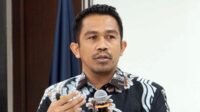
Gunawan, Senior Advisor at IHCS, emphasized that the Court’s ruling could serve as a solid foundation for advancing agrarian reform and resolving land tenure conflicts within forest zones.
“This decision must become the cornerstone for strengthening mechanisms to resolve land occupation in forest areas. Forest governance should not rely solely on the Forest Area Enforcement Task Force (PKH), but must also involve the Agrarian Reform Task Force (GTRA),” Gunawan asserted.
Both Sawit Watch and IHCS pledged to monitor the enforcement of the ruling closely and to file a constitutional complaint should the decision fail to be properly implemented.
With this ruling, the Constitutional Court is seen as having delivered substantive justice for indigenous peoples, smallholder farmers, and forest-dependent residents. The decision not only reaffirms the supremacy of the Constitution, but also marks a significant step forward in protecting community rights and ensuring sustainable forest governance across Indonesia. (P2)