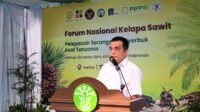
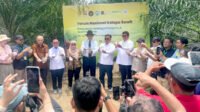
PALMOILMAGAZINE, ACEH – Palm oil plantations are not only a leading national commodity but also a vital source of livelihood for communities across Indonesia. Recognizing this strategic role, IPB Training, in collaboration with the Palm Oil Fund Management Agency (BPDP) and the Directorate General of Plantations (Ditjenbun), organized the 9th, 10th, and 17th batches of the Technical Training on Palm Oil Cultivation in Aceh from August 19–23, 2025.
Participants came from Aceh Tamiang and East Aceh, two of the province’s key palm oil–producing regions.
At the program’s opening, officials highlighted palm oil’s significant role in driving local economies. With proper management, the crop not only boosts farmers’ incomes but also creates new jobs.
Also Read:
Baginda Siagian, Director of Palm Oil and Other Palmae, emphasized via online remarks that strengthening human resources is critical to the success of Indonesia’s food security agenda.
“Improving farmers’ competencies will directly impact community welfare. That is the main goal of this program,” he stated in a press release received by Palmoilmagazine.com on Sunday (Aug 24, 2025).
The training went beyond technical skills, also instilling awareness of sustainable cultivation practices—ensuring palm oil continues to generate economic benefits without compromising environmental preservation, while safeguarding long-term prosperity for future generations.
Participants were encouraged to become change agents in their respective areas, sharing new knowledge with farmer groups, peers, and village communities.
Speakers stressed that the success of palm oil should be measured not only by harvest productivity but also by its contribution to broader social and economic development.
N.M. Apuk Ismane from the Agricultural Human Resources Development and Extension Agency (BPPSDMP) added that strengthening palm oil human resources in key producing regions must remain a priority.
“Aceh has strong potential to serve as a role model for palm oil HR development in Indonesia,” he noted.
By bringing together academics, practitioners, and local government, the program is expected to serve as a learning model that can be replicated elsewhere—positioning Aceh not only to raise the quality of its palm oil workforce but also to inspire sustainable plantation development at the national level. (P2)