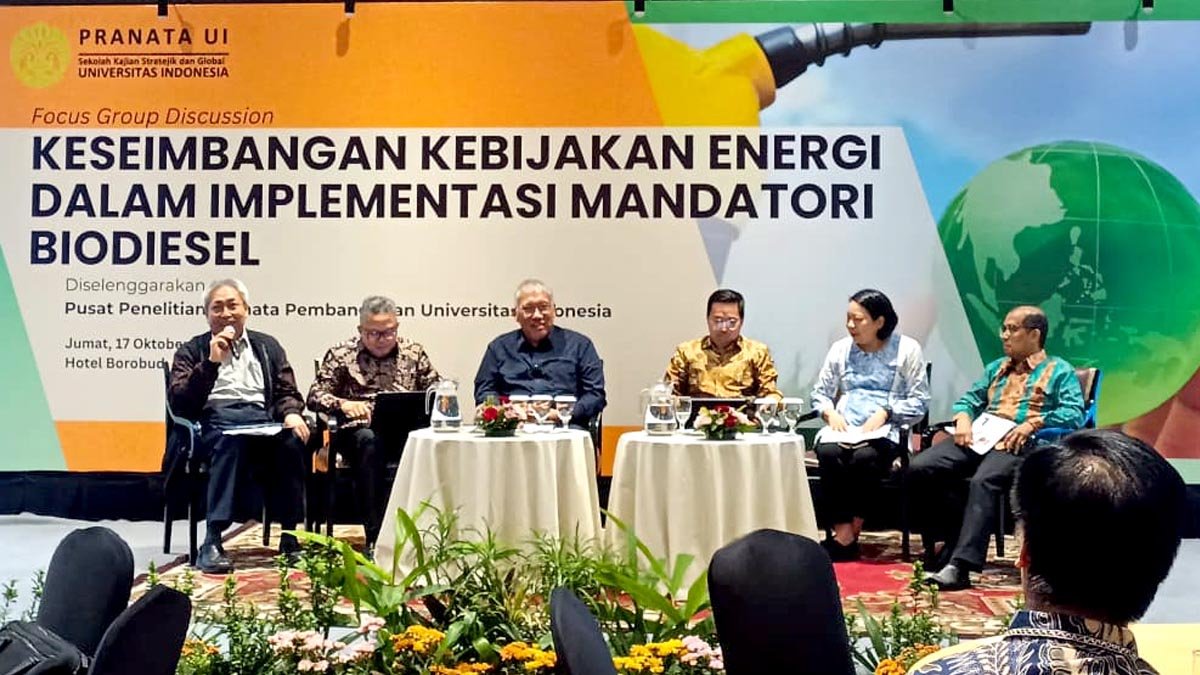
PALMOILMAGAZINE, JAKARTA – The implementation of a higher biodiesel blend mandate, such as B50, could have a significant impact on crude palm oil (CPO) export levies and the welfare of smallholder farmers. This was highlighted by Dr. Widyono Soetjipto, a researcher from the Pranata Center for Development Studies, University of Indonesia (Pranata UI), in his study titled “Impact of Mandate Increase on Export Levy and FFB Prices.”
According to Dr. Widyono, raising the biodiesel blend ratio from B40 to B50 would substantially increase the demand for CPO. “CPO demand for the B40 program is around 14.2 million kiloliters, while for B50 it would rise to 18.69 million kiloliters—an additional requirement of approximately 4.49 million kiloliters,” he explained during the Focus Group Discussion on Energy Policy Balance in the Implementation of the Biodiesel Mandate, attended by Palmoilmagazine.com on Friday (October 17, 2025).
Simulation results suggest that if biodiesel production expands, the CPO export levy (PE) rate would need to rise from 10% to 15.17% to sustain biodiesel subsidy funding. “With that increase, the subsidy gap can be covered, but it would also make palm oil exports more expensive,” Dr. Widyono added.
Also Read: Indonesia’s B50 Biodiesel Plan Faces Warnings of Technical and Market Risks
Further calculations show that maintaining the PE rate at 10% could increase CPO export volumes to 30.9 million tons—enough to fund the biodiesel subsidy. However, to preserve fiscal stability, the government would need to limit the biodiesel subsidy to around Rp3,460 per liter, significantly lower than the current average of Rp7,200 per liter.
“If subsidies remain unchecked, it could trigger inflationary pressure and strain the state budget. Therefore, adjusting the export levy becomes essential,” he emphasized.
Farmers’ FFB Prices at Risk of Decline
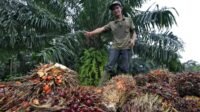
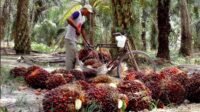
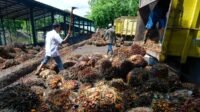
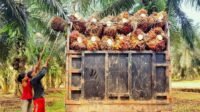
The export levy increase is also expected to directly affect Fresh Fruit Bunch (FFB) prices at the farmer level. Based on Pranata UI’s simulation, every 1% increase in export levy could reduce FFB prices by around Rp333.67 per kilogram. Thus, raising the levy from 10% to 15.17% could potentially lower FFB prices by about Rp1,725 per kilogram.
“The higher export costs will initially burden exporters but eventually suppress domestic CPO prices. This decline will directly impact farmers, especially independent smallholders,” he noted.
Also Read: Indigofera Leaves Waste Turned into Eco-Friendly Catalyst for Palm Biodiesel
Dr. Widyono stressed that any move to raise the biodiesel mandate must be backed by careful assessment of upstream economic impacts. “We must strike a balance between sustainable energy goals and farmers’ welfare. Without a fair compensation mechanism, the mandate policy risks widening inequality across the supply chain,” he warned.
He concluded by recommending that the government adopt a flexible export levy adjustment mechanism, along with regular evaluations of its effects on farmgate prices and export markets. (P2)