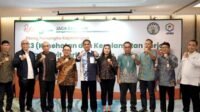
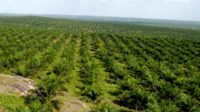
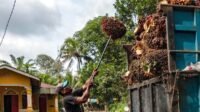
PALMOILMAGAZINE, JAKARTA — The Indonesian government is preparing an innovative scheme to manage confiscated palm oil plantations. The Ministry of Cooperatives and SMEs (Kemenkop) plans to collaborate with Koperasi Desa Merah Putih (KDMP) as a village-level manager, in partnership with the state-owned enterprise PT Agrinas Palma Nusantara, which will act as the core business operator.
According to Ahmad Zabadi, Secretary of the Ministry of Cooperatives, the initiative is designed to ensure that the management of confiscated palm oil assets directly benefits local communities while maintaining the sustainability of state-owned resources.
“The concept is simple—Agrinas Palma will serve as the core company, while village cooperatives will operate as plasma units managing the plantations in their respective areas,” Ahmad said during a media briefing in Jakarta on Friday (Oct 24, 2025).
Also Read:
Ahmad explained that the Ministry and Agrinas Palma are currently developing a joint management framework, including the distribution of roles between the company and cooperatives. The model aims to become a new benchmark for transparent and productive management of state-confiscated palm oil lands.
“This is not just about managing land; it’s about empowering the rural economy. We want communities to be part of the national palm oil value chain through cooperative institutions,” he added.
Financing Access Remains a Key Challenge
However, Ahmad acknowledged that several technical aspects are still under discussion, particularly regarding the legal status of the land and its potential use as collateral for cooperative financing.
“We are still evaluating the form of land transfer to cooperatives. If it takes the form of a Right to Cultivate (HGU), it may be used as loan collateral—but the final decision will depend on inter-agency deliberations,” he said.
Also Read: IPOC 2025: Indonesia Strengthens Palm Oil Governance and Global Partnerships in Bali Forum
This initiative is seen as a step toward strengthening a village-based palm oil business ecosystem built on balanced partnership principles. By involving cooperatives, the management of state-confiscated palm oil lands is expected to not only benefit the state but also promote equitable economic growth in palm-producing regions.
If successfully implemented, the program could serve as a national model for inclusive and sustainable plantation asset management—empowering local cooperatives, engaging communities, and reinforcing the long-term resilience of Indonesia’s palm oil industry. (P2)